
By Valentina — Keeper of Quiet Stories
I did not go to the theater looking for her.
I went looking for a story.
It was not even the plan for the night.
My husband was supposed to put our son to sleep, the familiar choreography of bedtime and then meet me in our bedroom so we could watch our usual show together. Something light. Something routine. A shared ending to an ordinary Friday.
But 8:30 came and went.
Then 9:00.
The house was quiet in the way that tells you someone has fallen asleep somewhere they didn’t intend to. I walked past my son’s room and saw them both, father and child, collapsed into sleep, the soft exhaustion of the week settling over them like a blanket.
And suddenly, I was wide awake.
Alone with a rare, unscheduled hour on a Friday night.
So I did what I rarely do without planning, I went to the movies.
The theater lights felt warmer than the night outside, almost ceremonial. I scanned the listings without much intention until one title stopped me simply because it was a woman’s name:
Melania.
No subtitle. No explanation.
Just her.
A woman in proximity to power.
A woman often spoken about but rarely heard from directly.
It felt… interesting.
Not because of politics, I was not looking for ideology, but because I am always curious about women who find themselves standing beside history.
I wanted to understand her.
Not judge her.
Not admire her blindly.
Just understand her as a woman, her origins, her navigation of visibility, her emotional architecture inside a role that consumes identity.
I expected beginnings.
Immigration stories.
A young woman crossing continents with ambition folded into her suitcase. I expected motherhood, marriage, contradiction, the layered reality most women live quietly every day.
Instead…
the film opened like a wardrobe door.
Fabric first.
Always fabric.
Designers. Fittings. Mirrors reflecting mirrors. Rooms prepared not for living, but for viewing. The camera lingered on textures as though clothing were biography.
Her mother appeared through the language of fashion, legacy translated into tailoring rather than memory.
And slowly, it became clear:
I was not watching a life unfold.
I was watching an image being assembled.
The narrative moved quickly toward inauguration week, compressed into the final days before ceremony. Three days, if I understood it correctly. Three days to construct the visual face of a First Lady.
Meetings about gowns carried diplomatic gravity.
Conversations revolved around gowns, invitations, and the orchestration of celebration. Colors were discussed with precision, everything anchored in white and gold. Flowers selected not just for beauty but for symbolism. Textures, carpets, table settings, every surface curated to reflect ceremony rather than comfort.
The planning carried the gravity of diplomatic preparation. Yet I noticed how much time the film gave to arranging the party of power, far more than it gave to arranging the portrait of the woman herself.
Her son appeared briefly, protected, distant, but never long enough to feel known.
She spoke about balancing motherhood, daughterhood, national duty…
Yet the film showed only one balancing act:
Appearance and expectation.
There was one moment when the surface nearly gave way to something deeper.
It came through grief.
January 9th marked the anniversary of her mother’s passing, a day that, for most daughters, would belong entirely to memory. But national duty required her presence elsewhere, attending a ceremonial funeral for another public figure.
Private mourning folded once again into public obligation.
Later, the film followed her back to New York.
Back to a cathedral her mother used to attend.
The church was empty, heavy with red flowers. Three candles were already burning when she entered.
She did not sit.
She did not kneel.
She moved quietly to the candle stand, lit a flame for her mother, blew out the taper, and walked out.
Grief, too, seemed scheduled.
Outside, a priest offered her a blessing.
When he finished, the ritual silence waited for its closing word:
Amen.
Instead, she said:
“Thank you.”
And somehow that small substitution echoed louder than prayer itself.
Toward the end of the film, after the inauguration festivities dissolved, the narrative followed them into the White House as they arrived to inhabit the private quarters.
Her father walked beside them through the corridors, present for this monumental transition.
Yet when they reached the bedroom floor and she turned to say goodnight, the exchange felt strikingly brief.
No embrace.
No lingering gratitude.
Just a quick “See you tomorrow” before she stepped into the room with visible excitement.
I remember noticing the absence more than the moment itself, how such a historic, overwhelming day ended without the instinctive warmth many daughters might offer an aging father walking beside them through it.
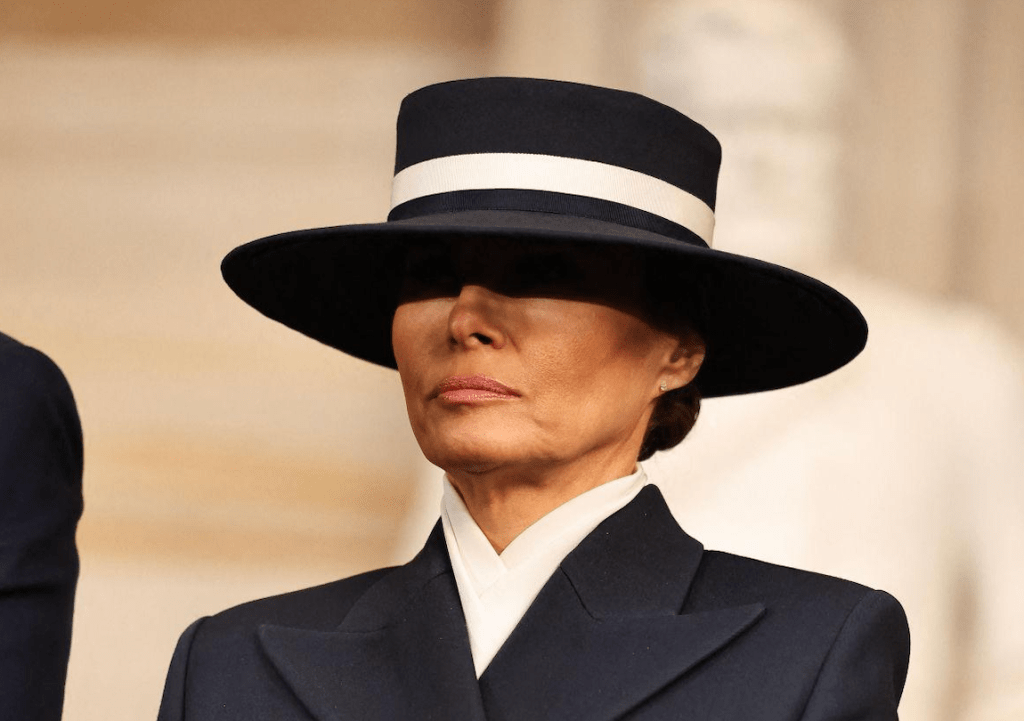
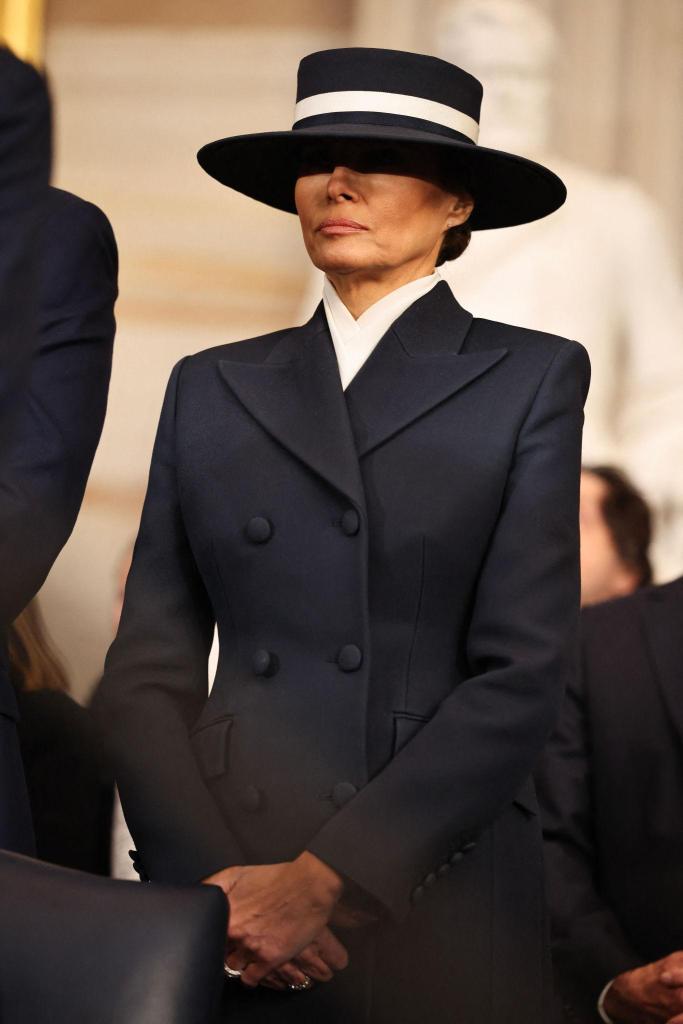
And then there was the hat.
Structured. Elegant. Architectural in its precision.
It cast a deliberate shadow across her eyes during the inauguration ceremony, indoors and out, shading the one place where humanity leaks most easily through composure.
We wear hats to shield ourselves from the sun.
To protect our eyes from light too strong to meet directly.
But there was no sun inside that hall.
So what was being shielded?
Fatigue?
Grief?
Privacy?
Or simply the instinct of a woman who has learned to survive visibility by filtering how much of herself the world can read?
The hat did not hide her.
It protected her.
And suddenly it felt less like fashion…
and more like armor.
If the hat was armor, the film showed how it was forged.
Not in closets, in fittings.
In the careful construction of clothing meant to appear effortless.
Designers met her high above New York City, in an apartment that felt less like a home and more like a stage. The skyline stretched endlessly beneath her windows. The doors were gold or seemed gold, spectacular in that language wealth speaks fluently.
The hat outfit shaped with precision.
The white dress that followed, marked by a stark black stripe, crafted to perfection.
I admired the discipline.
The taste.
The understanding of presentation as power.
But I kept waiting for something else.
Something that resembled the way women actually live.
Because most women’s lives are not made of three immaculate days.
Most women do not live behind gold doors and skyline views.
Most women’s elegance is improvised, assembled between school pickups, deadlines, aging parents, grief, love, exhaustion, and the quiet work of becoming.
Most closets, mine included, hold evidence of that mixture.
Winter beside summer.
New beside old.
Clothes tied to memories rather than ceremonies.
And most women are like that too:
A mixture of everything.
Which is why, sitting there in the dark theater, I felt the distance growing, not from her as a person, but from her as a portrait.
Because the role of a First Lady is not only to look extraordinary.
It is, in some way, to offer a reflection women can recognize.
A shape of womanhood that can guide, comfort, or at least feel reachable.
But the film gave me couture where I had hoped for interiority.
Perfection where I had hoped for contradiction.
Aesthetics where I had hoped for a woman.
And I walked out with the same question still resting beneath the brim of that hat:
How do you inspire a nation of women with a life that feels untouchable?
 Poems From The Kitchen Table
Leave a comment