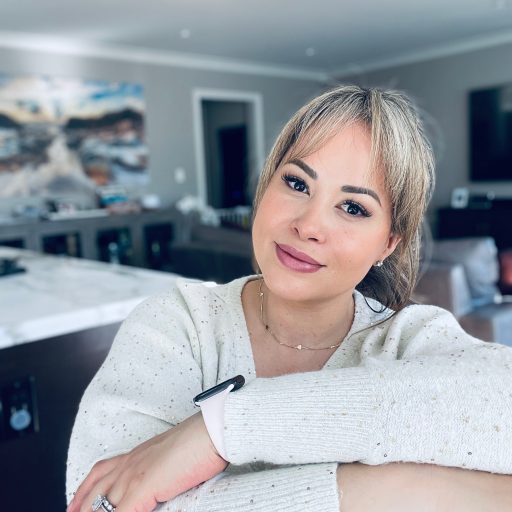
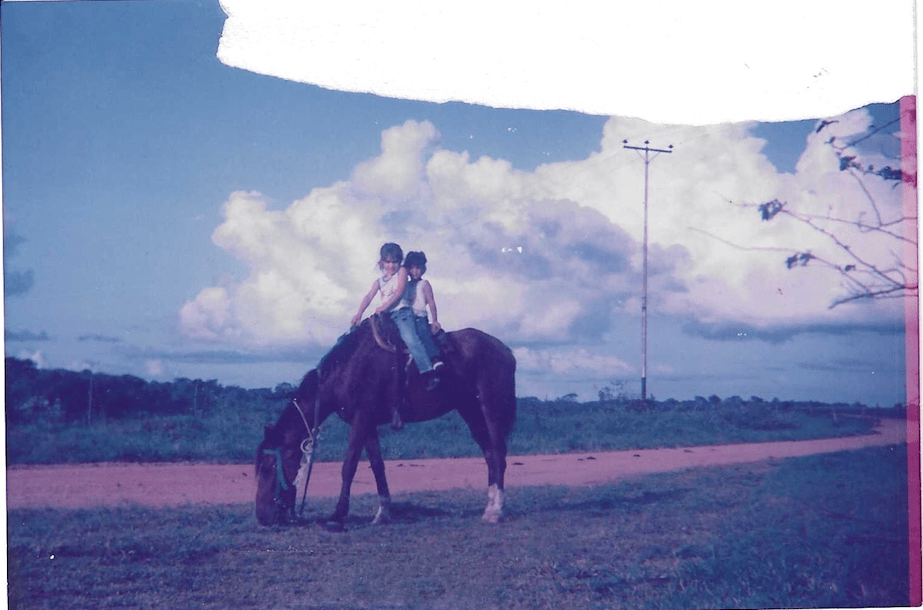
I wrote this story in 2021 during a creative writing class at Stanford University. It’s based on a real memory from my childhood: a horseback ride shared with my younger sister. For many years, I wondered what had made us so different. Since then, I’ve learned to see our differences with less judgment and more compassion. This story doesn’t seek to explain or compare—but rather to honor a moment that, in some way, still connects us.
The first rays of sunlight lit up her room. Beneath the living room window sat a blue couch where she’d perch each morning to watch the world wake up. She ran toward it and leaned forward, eager to see the workers herding the cattle. Behind her, the unmistakable scent of freshly brewed coffee filled the air, wrapping the morning in warmth and routine. But outside, the world moved wildly.
She never knew where the cattle were headed, but the sound was unforgettable—a deafening thunder of hooves pounding the earth like a desperate drumbeat. The dust rose in a light brown cloud—not as pale as sand, but not as dark as mud. There was a palpable urgency in the air, a shared panic between men, cows, and horses. Even from the window, she could feel the rush of adrenaline.
Her father, holding his first cup of coffee, sat silently in the corner.
At six years old, she said, “Why don’t the cows realize they outnumber the horses? If they went to war, they’d probably win. Oh wait—humans are riding the horses. Still… I think they’d stand a chance if they really tried.”
She watched until the last animal vanished beyond the horizon of those sixteen thousand acres, eyes wide with wonder. In her mind, she was the one on horseback.
For years I thought of that morning as if it belonged to someone else… until I realized that little girl was me.
That day, I wore navy-blue boots, jeans, and a white t-shirt. I was ready to ride San Vicente, a dark brown Quarter Horse with a white mark on his forehead. Tall, strong, fast. He was my champion. There was a special bond between us—quiet and deep. I felt like I could hear his heart calming mine. He wasn’t just a horse; he was my refuge, my ally, my strength made real.
My parents had decided it was time for my younger sister to learn to ride. We were only eleven months apart. San Vicente stood just outside the gate—he was afraid of our family dogs: Charlie, a brown and white boxer, and Princesa, a caramel-colored pit bull with a strong personality.
The dogs were brought inside. We saddled the horse. For our first loop, I rode in front while Keylla sat behind me, her little arms wrapped around my waist. We laughed. The wind touched our faces. For a moment, everything was perfect.
But our parents had forgotten to close the gate. Charlie and Princesa ran out after us, trying to “rescue” us from the giant animal.
San Vicente panicked. He went from zero to sixty in seconds. With one hand, I gripped the reins; with the other, I held my sister’s tiny hand, trying to keep her on the saddle as long as I could, trying to shield her from fear and from speed. But Keylla, terrified, let go. I tried to calm the horse, but I saw her fly through the air and hit the hot dirt.
I was scared. Confused. I remember trying so hard to stop the horse. I truly did. But then something shifted in me. I realized I couldn’t. I remember thinking clearly, “I have to make a choice.” I didn’t have many.
Stay on, with no control of where I was headed. Or let go.
“It’s going to hurt,” I told myself.
And I let go.
The fall was brutal. Stones embedded in my skin. A sharp pain in my left arm—what doctors later called an incomplete fracture. For the first time, I wondered if being brave might also mean being alone. As I pulled myself up, one thought crossed my mind: “Where is everyone?” I began to walk home in tears, feeling like I had been left behind by the world—though I was only six.
They found me on the road. My sister was already safe. I had lost a horse, a fall, and a part of my childhood innocence.
I got back on. Keylla didn’t.
As years passed, we grew in different directions. One became determined, bold. The other—sweet, cautious. Both brave in their own ways.
I, the older one, spent much of my life trying to understand those differences. At nineteen, I left the country with little money and little English. I worked. I studied. I graduated. I grew. Keylla took another path. She left college more than once. At twenty-nine, she became a mother. She raised her child with tenderness and strength, living between our parents’ homes. I supported her as best I could—from a distance.
Today, our lives look different. But there is no victory or failure. Only choices. Timing. And paths. From afar, I continue to walk alongside her in the ways I can. I haven’t always known how to do it with tenderness, but my intention has always been to care.
That ongoing gesture has also shaped my own healing. A quiet reconciliation with the little girl who once believed she had to carry it all. I’m learning how to give without losing myself, and to let go without ceasing to love. Not because I owe it—but because affection, even when it changes, never fully disappears.
I may never know why one sister got back on the horse and the other didn’t. But I’ve learned that both journeys are worthy of respect. And that shared ride—even though it ended in a fall—was also the beginning of two very different and beautiful lives.
To whoever is reading this, I leave you with a question:
Do you remember the exact moment you felt responsible for someone else’s well-being in your family?
For me, it was this day. At six years old, my mind created a silent story: that from then on, I would take care of my sister—no matter what. A belief born from love and fear, but one that would later bring me much suffering.
Over time, I’ve come to understand that our minds are meaning-making machines. What once helped us survive can become a heavy burden—unless we bring it into awareness. As adults, we have the chance to pause, to look at these inner stories with tenderness, and rewrite them if they no longer serve us.
No one came into this world to carry the life of another. Each person is responsible for their own path. Understanding this doesn’t mean loving less—but loving with freedom.
And perhaps, just perhaps, that too is a kind of courage.
Because sometimes, like that little girl on the runaway horse, we must decide: do I keep riding without direction, or do I let go?
Yes, it hurts.
But with time I’ve learned that letting go isn’t falling—it’s trusting. It’s allowing light to enter the places we thought had no way out. And in that quiet but firm act, real transformation begins.
Copyright © 2025 Valentina DuPont. All rights reserved.
 Poems From The Kitchen Table
Leave a comment